Tuesday, July 30, 2013

The Murder of Billy Sell

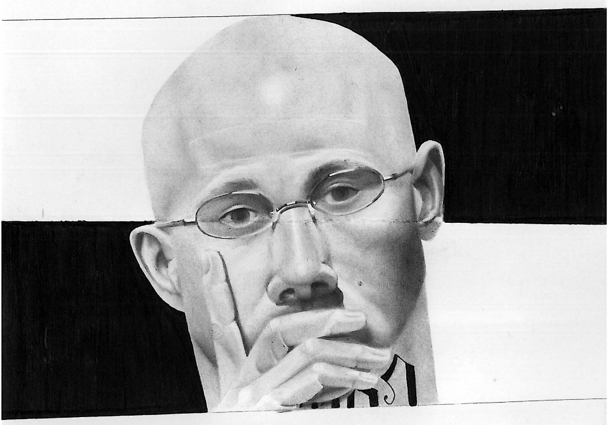
Billy Sell self-portrait #1


The above image is a self-portrait of Billy “Guero” Sell, hunger striker who died at Corcoran state prison on July 22, 2013. CDCR attempted to cover this up, not even informing prisoner advocates it met with in the following days that a death had occurred. When outside supporters were informed days later by other prisoners, CDCR reluctantly confirmed the news, but insisted that Sell had not been on hunger strike, but had “merely” committed suicide by hanging. (Which in itself would say plenty about the conditions he was being held in!)


Perhaps not so coincidentally, in the intervening days, the press reported that “independent monitors” from the state Inspector General were being sent into prisons to review how hunger strikers were being treated. The initial results of this “independent monitoring” seem unpromising, but as preemptive damage control it all makes a certain kind of sense.


While the precise details are not yet known, CDCR has since been forced to admit that Sell was in fact on hunger strike, and had been registered as such until just a day before he died. (Keep in mind that if a prisoner accepts any liquid other than water, such as the Kool-Aid issued with meals, that prisoner in counted as ending his hunger strike. If a prisoner is seen “fishing” – passing anything from cell-to-cell – that prisoner is similarly considered off hunger strike. This and other counting tricks keeps the number of hunger strikers low.)


Carol Strickman, an attorney with Legal Services for Prisoners With Children, has provided this list of other prisoners who, over the past two years, have similarly died and had their deaths ruled suicides, in the context of the ongoing hunger strikes against solitary:


Johnny Vick apparently hung himself on Friday, September 16, 2011, in his cell at Pelican Bay State Prison. This was during the period between the first and second phases of the 2011 hunger strike (July 1 – 20, then September 26 – October 13). He was 30 years old. We understand from Mr. Vick’s family that he had mental health issues. We are not certain that he was in the SHU or Ad-Seg at the time of his death, but had at one point been in the SHU. He may have been on suicide watch at the time of his death. It was reported that proper procedures were not followed.


Alex Machado hung himself on October 24, 2011, in his Ad-Seg cell at Pelican Bay State Prison. He had been placed in Ad-Seg at Kern Valley State Prison in December 2007. He was later transferred to Pelican Bay SHU in February 2010. In June, 2011, he was removed from the SHU and transferred to Ad-Seg at Pelican Bay due to his mental health needs. We do not know if he participated in the hunger strikes. Alex was known and liked for his assistance to other prisoners in their legal matters.

Neighboring prisoners reported that he was screaming for help before going silent. A longer report is available on Solitary Watch.


Hozel Blanchard killed himself on November 8 or 9, 2011 in his Ad-Seg cell in Calipatria State Prison. He was 41. In his last weeks, he wrote to his family and to the courts about guard harassment and he sought an emergency transfer out of that prison. He also wrote that he had been on hunger strike and had been hospitalized for it.


Christian Gomez died on February 2, 2012, while on hunger strike at

Corcoran State Prison. He was 27 years old. Corcoran prisoners had issued a set of demands to the warden in December 2011, and resumed a hunger strike in late January. Mr. Gomez had only been on hunger strike for a few days. His death may be attributable to an underlying medical condition possibly aggravated by a lack of treatment by the prison’s health care department.


As Strickman notes, “Regarding suicides in general, a report is written every year that analyzes each suicide, and recommendations are made to CDCR. The person who has written these reports resigned this year, stating that his recommendations are not followed.”


Commenting on these “suicides”, Chad Landrum (another hunger striker) wrote,


“How do we know that these men intended suicide? We don’t. But of greater significance, we do know that there were repeated attempts to call “Man Down”, kicking on cell doors, etc., which was willfully ignored and neglected by guards. In parallel circumstances, were not state employees involved, anyone else would be charged with either murder or at the very least manslaughter.”


Indeed, regardless of the precise manner in which Sell and the other suicided prisoners died, their deaths can be rightly seen as cases of murder. Just some of the many murders that have resulted from isolation torture, the cruelty of captivity and confinement, and the vicious refusal of prisoncrats and government leaders to negotiate in good faith and meet the prisoners’ just demands. Such systemic murder is the logical conclusion of a system designed to destroy people, the physical corollary to what is primarily intended to occur in their minds and spirits.


We must think hard on how to break the impasse and force an end to the ongoing confinement and torture of tens of thousands.


More lives depend on it.


on the main Kersplebedeb website: http://kersplebedeb.com/posts/the-murder-of-billy-sell/


Saturday, July 27, 2013

Letter from a Hunger Striker: “If We Can Do This in Prisons Then Our Barrios and Ghettos Can Also Form United Fronts Out in Society…”

Today marks day nine of our peaceful protest hunger strike/work strike. We have heard on the news that people are being rehoused in an effort to isolate people further! The whole purpose of what we are doing is to protest isolation and as a result this concentration kamp reacts by further isolating us!


The news said 30,000 people participated in this prison strike which made history. But the state has also made history by torturing thousands throughout Amerikkka and its gulags. We are facing an extermination, a neutralization of thousands of oppressed mostly Brown and Black peoples. But this soft genocide is an extension of the long lineage of colonization that Chicanos, New Afrikans and First Nations people have been facing for 500 years. Prisons in the U.S. today are but appendages of this legacy of oppression on these shores.


Although we live in this advanced Imperialist state with all its high tech modes of repression and ultra secret technology it continues to underestimate the power of the people. We sit here in a supermax isolation torture center and yet we managed to mobilize 30,000 people in gulags throughout the state and beyond to rise up to these barbaric conditions and we resist this barbaric practice of torturing us en masse.


What seems to anger the state the most is that we have broken with reactionary views and have taken on a more revolutionary stance in our struggle for human rights behind prison walls. We have come to see that the ruling class has pitted us against one another within prisons but this wasn’t the first time. For hundreds of years the state has found ways to use divide and conquer tactics to keep us unable to come together for a resolution to our common oppression.


Our biggest advancement has been in our ability to form this United Front and it frightens the state because if we can do this in prisons then our Barrios and Ghettos can also form United Fronts out in society and this is when real people’s power can be exercised outside the State’s influence, it is when the people can be introduced to alternative forms of authority.


Today we continue in our indefinite hunger strike as we face the beasts to stop the torture and this is but one step toward some real transformations in U.S. prisons and throughout Amerikka.


People’s power!


Jose H. Villarreal

PBSP-Shu-C11-106

PO Box 7500

Crescent City, CA 95532


on the main Kersplebedeb website: http://kersplebedeb.com/posts/letter-from-a-hunger-striker-day9/


Wednesday, July 24, 2013

Panel Discussion on California Hunger Strike


Panel Discussion: The California Prisoner Hunger Strike & Ending Long-term Solitary Confinement on 7-17-13 at Revolution Books in Berkeley, CA


Andres Thomas Conteris, CloseGitmo.net – Stop U.S. Torture in Gitmo and U.S. Prisons; Director, Program of the Americans of Nonviolence International — recently interviewed hunger strikers in Pelican Bay SHU


Steven Czifra is a UC Berkeley student who spent a total of eight years in solitary confinement, including five in the Pelican Bay SHU. Along with other UC students and professors, he is taking part in a rolling solidarity fast in support of the prisoners and their demands.


Larry Everest, covers the prisoner hunger strikes for Revolution newspaper and is the author of Oil, Power & Empire: Iraq and the U.S. Global Agenda. (See Revolution Interview: Carol Strickman, from Prisoner Hunger Strike Solidarity Coalition Prisoners’ Struggle Against “Cruel and Unusual Punishment Amounting to Torture”)


Michael Montgomery is a reporter for KQED and the Center for Investigative Reporting who has covered California prison issues.


Danny Murillo was arrested at 16 years young, and sentenced to 15 years in state prison. 17 months were spent in Administrative Segregation (the hole) and six years in the Security Housing Unit (the SHU). Currently an undergrad student at UC Berkeley in the Ethnic Studies department and a George Miller Scholar.


On July 8, California prison authorities admitted that over 30,000 prisoners had joined the hunger strike by refusing meals. The Los Angeles Times said this “could be the largest prison protest in state history.” Prisoner representatives from the Pelican Bay State Prison SHU Short Corridor Collective Human Rights Movement said, “our nonviolent peaceful protest of our subjection to decades of indefinite state-sanctioned torture, via long-term solitary confinement will resume…consisting of a hunger strike/work stoppage of indefinite duration until CDCR [California Department of Corrections and Rehabilitation] signs a legally binding agreement meeting our demands, the heart of which mandates an end to long-term solitary confinement (as well as additional major reforms).”


Co-sponsored by Revolution Books and

the Stop Mass Incarceration Network-Bay Area


on the main Kersplebedeb website: http://kersplebedeb.com/posts/panel-discussion-on-california-hunger-strike/


Protected: Medical Abuse in 2013 California Prison Strikes


This post is password protected. To view it please enter your password below:


on the main Kersplebedeb website: http://kersplebedeb.com/posts/medical-abuse-2013/


Saturday, July 13, 2013

Statement of Solidarity from Incarcerated Women Across Massachusetts

This statement was created by Members of The Prison Birth Project:


As Prisoners across the country prepare to strike, our hearts and thoughts are with them. As incarcerated women we know first hand many of the abuses the strikers face on a daily basis—as well as many of the repercussions they may face in retaliation for the action against these abuse.


As incarcerated mothers we experience lack of access to healthy food, lack of respect, autonomy and access to health care, lack of access to children and are regularly set up by the system to fail.


As we stand in solidarity with striking prisoners, we ask you to stand in solidarity with us. Not just on July 8th—but every day of the year. To be in solidarity with us, we need folks from outside to come inside! Being behind the wall is hard and we need support while we are here, so when we get out we can be leaders. We need allies to be here both inside and out, to support us in creating space and community, to come together and be leaders. We need to be leaders because we are the experts.


We are here. We need folks to listen from their heart and be by our side when we are ready to speak, to strike and to stand out. We need allies to rally in support of policies inside and out so we can survive while we are here and thrive when we get out. We need allies to help us break down the wall between men and women inside—to help us bridge the gap and support our families through the realities of the criminal system.


Because of our experience, we are the experts on these issues and we ask that all allies, reformers, abolitionists, lawyers, legislators and our families work together, come together around the realities – not rhetoric – and help us move mountains and break down the walls in a supportive and sustainable ways physically, spiritually, politically and personally.


on the main Kersplebedeb website: http://kersplebedeb.com/posts/statement-of-solidarity-from-incarcerated-women-across-massachusetts/


Tuesday, July 09, 2013

July 9 Message from Short Corridor Hungerstrike Reps

Greetings to our supporters and all people of conscience.


We are grateful for your support of our peaceful protest against the state-sanctioned torture that happens not only here at Pelican Bay but in prisons everywhere. We have taken up this hunger strike and work stoppage, which has included 30,000 prisoners in California so far, not only to improve our own conditions but also an act of solidarity with all prisoners and oppressed people around the world.


We encourage everyone to take action to support the strike wherever they live. Sign the petition demanding California Governor stop the torture; plan rolling solidarity fasts if you are able; use every means to spread the word; and participate in non-violent direct action to put pressure on decision-makers.


If it was not for your support, we would have died in 2011. Thank you everyone. We are confident we will prevail.


In Solidarity,

– Todd Ashker, C-58191, PBSP-SHU, D4-121

– Arturo Castellanos, C-17275, PBSP-SHU, D1-121

– Sitawa Nantambu Jamaa (Dewberry), C-35671, PBSP-SHU,D1-117

– Antonio Guillen, P-81948, PBSP-SHU, D2-106

The PBSP-SHU Short Corridor Representatives


on the main Kersplebedeb website: http://kersplebedeb.com/posts/july-9-short-corridor/


Tuesday, July 02, 2013

2013 Prisoner Strikes

For more news about the 2013 prisoner strikes, see:


Some background documents:


And background documents from the Short Corridor Collective:


To get daily updates on the 2013 prisoner strikes, subscribe to the Hungerstrike Newsletter using the form in the right sidebar.


on the main Kersplebedeb website: http://kersplebedeb.com/posts/2013-prisoner-strikes/


Monday, June 24, 2013

Transfered, Beaten and Abused: The Ongoing Persecution of Kevin “Rashid” Johnson by the u.s. Penal State

The following is from a letter just received from Kevin “Rashid” Johnson, of the New Afrikan Black Panther Party Prison Chapter. As previously reported here, Rashid was recently transferred from Oregon to Virginia, likely in retaliation for his ongoing work reporting on and challenging abuses by the prisoncrats.


As can be seen here, Rashid is once again being targeted for physical and psychological abuse, with the goal of “breaking him”, i.e. destroying who he is and reducing him to a compliant inmate of their torture system. Rashid explains:


I was flown here to Texas on Jun 14. The day after I’d talked to Ben and wasn’t set for another call for several weeks. It was all timed and premeditated to carry out foul designs.


First I was sent to a prison called Byrd Unit, where, as soon as I showed up they put me in shackles, and cuffed me at the waist so my arms were immobile. Then a goon squad in waiting (hiding) forcibly cut all my hair off. Then they use the fact that I quite predictably resisted to speciously justify sending me to their long term solitary confinement prison called the Estelle Unit, where I remain.


Soon as I got here I’m met by another good squad, then cuffed behind and leg shackled after a strip search. They then took me into an office where the Assistant Warden Wayne Brewer, Major David Forrest and Captain James A. McKee were. When I properly asked Brewer who he was, he barked “shut up motherfucker. I’m doing the talking!” I was then immediately attacked by Forrest and McKee who repeatedly choked and hit me in the face and head, while Brewer went into a tirade of curses and threats to “break” me, “kill” me, etc. When I could breathe I just talked shit back. When they got tired, I was kicked out of the office and taken to a cell by the goon squad, when an injured throat and swollen left jaw. All requests for medical care have been ignored.


I have since been subjected to cell and strip searches at least every 30 minutes to 2 hours around the clock, every day. When I questioned this on Jun 19, I was promptly met by another good squad. I came out for the search without issue. Then I was ‘escorted’ back into the cell, laid on the floor in back of the cell out of view of a present portable audio-video camera and punched and kicked several times in the head and face.


The cells are full of mildew, black mold and roach infested. Prisoners are routinely beaten and abused back here. In fact the one housed in the cell directly in front of me, Edward Long #579657, was beaten while handcuffed behind. His right face if bruised and he has a laceration on the left side held shut with sutures tape. His left eye is surrounded by a black ring and his back is badly bruised.


I protested the haircut on spiritual grounds and was told Texas allows no exceptions. VA and OR blatantly violated my rights by sending me to a system where they knew I’d be shaved by force when they could have compacted me to a system that has no such requirements. See, Gortrell v. Ashcroft, 191 F. Supp 2d 23, 38-40 (2002). Also frequent searches even one a day are illegal. Blanks v. Smith, 790 F. Supp. 192, 194 (1992).


Also they gave me several bogus charges from the Byrd Unit, which McKee, who assaulted me, presided as hearings officer over, refused to let me appear and found me guilty.


on the main Kersplebedeb website: http://kersplebedeb.com/posts/transfered-beaten-and-abused-the-ongoing-persecution-of-kevin-rashid-johnson-by-the-u-s-penal-state/


Wednesday, June 19, 2013

Kevin “Rashid” Johnson Transferred From Oregon to Texas

Prison intellectual and radical critic Kevin “Rashid” Johnson has been transferred again.

Rashid had been held in Oregon’s Orwellian Snake River Correctional Unit – an unvarnished behavior modification programme – since last 2012. In Oregon he had written a series of articles exposing the racism, medical neglect, and psychological abuse to which prisoners in that state are subjected. Like his initial transfer from Virginia to Oregon over a year ago, this latest move – yet again, across the country – is clearly retaliation for his persistence in shining light on abysmal and destructive conditions that prevail in prisons across america.

So now Rashid is in Texas. We don’t know what condition he is in, or what conditions he is being held in, but the time after a transfer is often disorienting, and the prisoncrats and guards often seize the opportunity to practice their malice. For that reason, now is a particularly important time to reach out and let this comrade know that he is in our thoughts – even a postcard with a simple message saying hello would be welcome at a time like this – and in doing so, you also let his current captors know that he is not alone, and that despite their efforts he is not isolated from us.

Write to Rashid at:

Kevin Johnson

TDCJ # 01859887

264 FM Road 3478

Huntsville, TX 77320

Make sure a first and last name are clearly printed in the return address section of the envelope or your mail will be returned. Also, remember not to say anything that would give the guards an excuse to mess with Rashid more than they already are.

To learn more about Rashid, check out his website at rashidmod.com


on the main Kersplebedeb website: http://kersplebedeb.com/posts/rashid-transferred-to-texas/


Monday, June 10, 2013

Sleep Deprivation Intensifies Torture Conditions for Prisoners in Advance of Hunger Strikes and Work Actions

Oakland— Less than a month before state-wide hunger strikes are set to resume, The California Department of Corrections has instituted a new policy at Pelican Bay State Prison which has resulted in chronic sleep deprivation for prisoners in solitary confinement.


Both guards and prisoners complained to lawyers conducting legal visits last week about a new policy requiring prison guards to conduct “welfare checks” every thirty minutes on prisoners isolated in the prison’s Security Housing Units (SHU). Normally, prisoners in the SHU are counted every three to four hours by guards who patrol each unit, ensuring prisoners are in their cells. Each prisoner must be observed physically moving or showing skin. The frequency and method of these counts have already been challenged in a Federal lawsuit, /Ashker v. Brown/. Experts claim the sleep deprivation caused by the counts violate prisoners’ 8th Amendment rights.


“Sleep deprivation has many significant psychological consequences including irritability and impairment of the ability to make rational decisions,” says Dr. Terry Kupers, a clinical psychiatrist and an expert on forensic mental health. “Because of the harm it causes, sleep deprivation has been described as torture by organizations such as Amnesty International.”


The new policy has been ordered by Jeffrey Beard, the California Department of Corrections and Rehabilitation’s (CDCR) newly appointed secretary whose Senate Confirmation Hearing is scheduled for June 19, 2013. The directive applies to over 1,100 prisoners who are in solitary confinement in Pelican Bay.


“Tensions were very high at Pelican Bay last week,” says Anne Weills, an attorney who is representing SHU prisoners at Pelican Bay. “The guards are on edge and upset about this new policy. Obviously the prisoners are on edge and suffering because of the sleep deprivation. But they remain resilient and deeply committed to peaceful actions to make necessary changes.”


In January, prisoners at Pelican Bay announced in an open letter to Governor Brown that they would resume hunger strikes and include work actions to protest the conditions of their confinement. In 2011 over 12,000 prisoners in over a third of California’s 33 prisons participated in two waves of hunger strikes. The 2011 strike was called off when the CDCR promised new policies and other improvements that addressed five demands outlined by prisoners. Almost two years later, prisoners and advocates claim the CDCR’s promises have been empty, and prison conditions have worsened.


“This is torture,” says Azadeh Zohrabi of the Prisoner Hunger Strike Solidarity Coalition. “This intensified sleep deprivation adds to the long list of human rights violations endured by thousands of prisoners held in solitary for prolonged and indefinite terms, some for decades.”


Lawyers and advocates have also received demands from prisoners who plan to go on strike in San Quentin, High Desert, and Corcoran State Prisons. Prisoners have been clear that the strike could be called off if Governor Brown engaged in good-faith negotiations. Brown’s office has not responded to their request.


on the main Kersplebedeb website: http://kersplebedeb.com/posts/sleep-deprivation-intensifies-torture-conditions-for-prisoners-in-advance-of-hunger-strikes-and-work-actions/


Tuesday, June 04, 2013

Rethinking class: from recomposition to counterpower – Paul Bowman

http://libcom.org/library/rethinking-class-recomposition-counterpower


on the main Kersplebedeb website: http://kersplebedeb.com/posts/rethinking-class-from-recomposition-to-counterpower-paul-bowman/


Wednesday, May 22, 2013

Call the Warden for Dr. Mutulu Shakur

Dr. Mutulu Shakur had a stroke at the end of February and is having trouble obtaining the follow-up medical care that he needs. Please call the warden at Victorville and ask that Mutulu receive the medical care that he needs.


5/19/2013

People out here I want some contacts, I have not received any consultation on the concerns deriving from the stroke. I understand folks have been contacting the region and central office from medical follow- up which is a required recommendation for after-care. I have a three month widow to medically and therapeutically to solve the residue of the stroke.


Thank you for all you do, I love mother earth too.


Stiff Resistance,

Dr. Mutulu Shakur.


PLEASE CALL THE WARDEN’S OFFICE AT THE VICTORVILLE COMPLEX AND REQUEST THAT DR. MUTULU SHAKUR BE GIVEN THE PHYSICAL THERPY TO DEAL WITH THE PHYSICAL PROBLEMS FROM HIS STROKE. Phone 760-530-5000 Fax 760530-5103


GREETINGS TO ALL, 3/31/2013


I HAD A STROKE ON FEB16TH, I WAS IN THE HOLE BECAUSE THEY HAD A LOCKDOWN IN THE PRISON FOR AN ATTEMPTED ESCAPE. ON THE 15TH TO THE 16TH MY STROKE OCCURRED. I WAS TAKEN TO THE HOSPITAL FOR 4 DAYS TO DIAGNOSE THE EFFECTS OF THE STROKE.


I WAS LET OUT THE HOSPITAL ON THAT THURSDAY OF THE FOLLOWING WEEK AND PUT BACK IN THE HOLE AND STAYED TO THIS THURSDAY THE 28TH, MY EMAIL WAS NOT FUNCTIONAL FOR 24 HOURS. IM LETTING YOU ALL KNOW THAT I AM BACK IN GENERAL POPULATION, AND ANY VISITS WILL BE WITH THE GENERAL VISITING AREA. IF WANT TO YOU CAN NOW EMAIL ME EVEN THOUGH IM NOT FOCUSED ON HOW I SHOULD BE, BUT I WILL STILL LIKE TO HEAR FROM YOU EVEN IF YOU DONT HEAR FROM ME. MY VOICE IS A LIL STRANGE, MY EYES SIGHT IS A PROBLEM AND I WALK WITH A JIVE LIMP, BUT ALL IN ALL IM AN ALLIGATOR I CAN GO IN MUD AND WATER, AND IF I WASNT IN GOOD SHAPE I WOULD BE IN WORST CONDITION. DONT LOOK FUNNY AT ME BECAUSE I LOOK CROSS EYED BUT I WILL DEAL WITH ALL THE RESIDUE OF THE STROKE AS TIME GOES ON. I THANK YOU ALL fOR ALL YOUR CONCERN.


ANY WAYS I LOVE YOU ALL AND THANK YOU FOR YOUR SUPPORT. ITS NOT HOW YOU FALL DOWN BUT HOW YOU GET UP.


STIFF RESISTANCE


DR. MUTULU SHAKUR


on the main Kersplebedeb website: http://kersplebedeb.com/posts/call-the-warden-for-dr-mutulu-shakur/


Tuesday, April 16, 2013

Hunger Strike Begins at Wallens Ridge State Prison

http://virginiaprisonstrike.blogspot.ca/2013/04/hunger-strike-begins-at-wallens-ridge.html


on the main Kersplebedeb website: http://kersplebedeb.com/posts/hunger-strike-begins-at-wallens-ridge-state-prison/


Monday, April 15, 2013

Montreal, May 27: J. Sakai on The Politics of Security

The Politics of Security

a presentation by J. Sakai


Monday, May 27th, 6:30 pm

@ QPIRG Concordia

1500 de Maisonneuve O., suite 204

(metro Guy-Concordia)


The recent f.b.i. and grand jury repression against anarchists in the Northwest USA, as well as the continued police repression of the Anti-Globalization resistance, has reawakened questions about movement security. There are many misunderstandings about what security is. From the belief that it is an area of cloak and dagger manuevers to the impression that security is about lists of rules that must be obeyed. This is an area where knowledge is traditionally not written up, but passed along by word of mouth. What this workshop is meant to do is to explore the underlying politics of security as an area of struggle. Discussing basic understandings that can be applied in different situations in non-authoritarian and diverse ways.


Wheelchair accessible

Whisper translation into French will be available


For more information: info@kersplebedeb.com


on the main Kersplebedeb website: http://kersplebedeb.com/posts/politics-of-security/


Friday, April 12, 2013

COINTELPRO Murders (Intervention by Geronimo ji Jaga)

The following is Geronimo ji Jaga’s intervention at a September 14, 2000 forum that Rep. Cynthia McKinney (D-GA) hosted during the Congressional Black Caucus’s legislative weekend in Washington, DC. It was initially included in a pamphlet published in 2001 by the Human Rights Research Fund (founded by activist attorneys Kathleen Cleaver and Natsu Saito) in collaboration with Release 2001, which was subsequently reprinted in full in the book Let Freedom Ring, available from Kersplebedeb Left-Wing Books.


This panel has established important truths already today, but there is one thing that has been omitted: the activists of the ’60s who were killed by cointelpro. What it boils down to is murder. That is something that we have been trying to get established since I have been out of prison. We are trying to get hearings into actual murder cases. And here’s how it would work. When you would have everyone together, like we are all together right herd, we all say, “Okay, we are all going to not disrespect each other,” and everybody agrees. But then the fbi sends someone in who stirs things up, tells lies and causes us to begin to disrespect each other. So one may begin to disrespect another one, and then another one stabs him and he is dead, and then you have the murderers in the background boasting and bragging about it. cointelpro came in so many forms. But the first thing I would think of is these murders. When you have beautiful sisters and brothers such as Fred Hampton, who was shot and killed; you have Robert Wells, put in a sleeping bag and thrown off a freeway, killed in New York City, still unsolved. All of these cases I am talking about are clear cointelpro murders. Fred Bennett, who was killed in San Francisco. Franco Diggs. John Huggins. Bunchy Carter.


They Were Victims. They Were Murdered.


All of the names I have mentioned are victims of cointelpro. They were murdered. Their murderers have never been brought to justice. So this is where we need to begin. We are dealing with straight-up murderers who turn around and call me a murderer and put me in prison for 27 years, when I murdered no one. These murderers are running around. They still are practicing their art of murder, outright murder. [Audience begins to call out names.] John Clark. Watature Pope.


These brothers and sisters were murdered. Mark Clark. Twyman Meyers.


[Geronimo: Come on with some more.]


John Africa. Kombora. Komboze. Tracy. Kayatta. Ralph Featherstone.


That’s very true. There is Malik el Shabazz. And we can continue to call names. This is how important and serious this is to us.


These brothers and sisters we have mentioned, they were family members. They were mothers, they were fathers, they were sisters, they were brothers. And they are dead. They were murdered. It was done by the U.S. government. They have admitted it.


You have brothers like Mutulu—and myself when I was in, and others—who call ourselves prisoners of war. We say political prisoners, okay. And you try to understand, what are you talking about? This war continues. It is an actual war against our people. And it should be handled just as they handled the trials in Nuremburg.


So I want to urge everyone to support and put muscle behind this effort that will expose the true murderers and let the victims out. What is Sundiata Acoli doing in prison? Ruchell Magee. Yogi Pinell. Chip Fitzgerald. There are so many.


We can’t allow that to happen. These hearings will make it very clear, and then these brothers and sisters will be released out of these prisons.


cointelpro didn’t stop at the Black liberation movement—we all should study this—but it went into every movement that was involved in liberation. This is why Laura Whitehorn spent so much time in prison; why Marilyn Buck and Susan Rosenberg and so many who are victims of cointelpro continue to languish.


on the main Kersplebedeb website: http://kersplebedeb.com/posts/cointelpro-murders-intervention-by-geronimo-ji-jaga/


Thursday, April 11, 2013

Understanding Onkwehón:we Rising: Basic Points of Unity

http://onkwehonwerising.wordpress.com/2013/04/08/understanding-onkwehonwe-rising-basic-points-of-unity/


on the main Kersplebedeb website: http://kersplebedeb.com/posts/understanding-onkwehonwe-rising-basic-points-of-unity/


Wednesday, April 10, 2013

Daniel McGowan Forbidden From Publishing Articles Without Permission (Village Voice)

http://blogs.villagevoice.com/runninscared/2013/04/daniel_mcgowan.php


on the main Kersplebedeb website: http://kersplebedeb.com/posts/daniel-mcgowan-forbidden-from-publishing-articles-without-permission-village-voice/


Snapshot of Genocide

An excerpt from Loic Wacquant’s Punishing the Poor: The Neoliberal Government of Social Insecurity (Duke University Press 2009), pages 59-73:


The Gaols of the Subproletariat: An Experimental Verification


It suffices, to discern the extrapenological functions served by the outsized extension of the US carceral apparatus even as crime plummeted for over a decade, to sketch in broad strokes the sociological profile of the “clientele” it accommodates at its entry point. Whence it turns out that the half-million detainees who glut the country’s 3,300-odd jails on anyone day–and the fourteen million bodies that pass through their gates in the course of a typical year–are essentially drawn from the most marginalized fractions of the working class, and especially from the subproletarian families of color in the segregated cities ravaged by the conjoint transformation of wage labor and social protection.(( The statistics in this section are taken from a survey, conducted by the federal Department of)ustice from October 1995 to March 1996, of a representative sample of 6,ooo detainees in 431 county jails. Caroline Wolf Harlow, Profile of Inmates 1996 (Washington, D.C.: Bureau of justice Statistics, 1998). For comparisons over time, these earlier studies were relied upon: Profile of jail Inmates, 1989 and Profile of jail Inmates: Socio-Demographic Findings from the 1978 Survey of Inmates of Local jails (Washington, D.C.: Government Printing Office, 1991 and 1980, respectively), while various Census Bureau publications were used for comparisons with the national population. Statistical data of this kind have a high coefficient of uncertainty owing to the conditions under which the interviews are conducted, the characteristics of the population questioned, the sensitivity of some of the items asked, and a lack of precision in the coding of responses. However, the orders of magnitude they establish in the respects that interest us here are sufficiently clear that we can tre,p.t them as reliable, especially since other, local investigations suggest that this study tends to underestimate the material insecurity and sociocultural destitution of the carceral population.)) Thus, recovering its historical mission of origin, incarceration serves above all to regulate, if not to perpetuate, poverty and to warehouse the human rejects of the market. In this regard, the gargantuan operation of punishment houses converges with and complements the aggressive rolling out of workfare programs.


Indeed, six in ten occupants of county jails are black or Latino (41 percent and 19 percent, respectively), as against 48 percent in 1978, whereas these two communities put together represent barely one-fifth of the national population. Just under one-half held a full-time job at the time of arrest (49 percent), while 15 percent worked “part-time or occasionally” and the remainder were looking for work (20 percent) or economically inactive (16 percent). This astronomical jobless rate is hardly surprising considering the educational level of this population: one-half had not graduated from high school, even though this requires no examination, and barely 13 percent said that they had pursued vocational, technical, or academic postsecondary education (compared to one-half of this age category in the country as a whole).


As a result of their marginal position on the deskilled labor market, two-thirds of detainees lived in a household with under $1,000 in income per month (and 45 percent in households with under $600), corresponding to less than half the official poverty line for a family of three that year–although two-thirds said that they had received wages. This indicates that the vast majority of the occupants of county jails do come from the ranks of the “working poor,” that fraction of the working class that does not manage to escape poverty although they work, but who are largely ineligible for social protection because they work at poverty-level jobs.((On the one hand, these jobs generally provide neither medical insurance nor social coverage (which depends on the goodwill of the employer). On the other, having a job, and thus an income, however meager, disqualifies them from public assistance and medical coverage for indigent households (public benefits which, in any case, are now very hard to obtain and provide only for strictly limited periods, as we shall document in the next chapter).)) Thus, despite their penury, barely 14 percent received public aid (payments to single parents, food stamps, food assistance for children) on the eve of their arraignment. If we include the 7 percent receiving disability or retirement benefits and the 3 percent on the unemployment rolls, it turns out that less than one-quarter of jail detainees received some government support. The twofold exclusion from stable wage work and public assistance that affects widening sections of the American proletariat explains the lengthening of careers in the illegal economy, and thus the pronounced aging of the jail population: in 1996 one detainee in three was older than 35, twice as many as in 1978. This aging directly parallels that of persistent offenders and the entrenching of criminal commerce in the inner city, where established street gangs have taken an entrepreneurial turn and included more members in their thirties and forties as opportunities in the regular economy dried up.


The material insecurity of detainees in American jails is matched only by their social denudement: only 40 percent grew up with both parents (as against a national average of 77 percent) and fully 14 percent spent their childhood in an orphanage or group home. Nearly half were raised in households receiving public assistance, and over one-quarter grew up living in public housing-the most reviled sector of the urban housing market due to its extreme dilapidation, dangerousness, and the double class and caste segregation that stamps it. Moreover, more than one-third of jail inmates confided to having a parent or guardian who is an alcoholic (30 percent) or drug addict (8 percent). Confirming the fragility of their social ties, a bare 16 percent of them were married, compared to 58 percent for men in their age bracket nationwide.


Besides, incarceration is quite familiar to detainees in the strict sense that more than half of them have or had a close relative in prison (a brother, 30 percent; their father, 16 percent; a sister or mother, 10 percent). The same goes for physical violence and especially gun-related violence. One in nine men and one in three women said that they had suffered physical or sexual abuse during their childhood; three percent of men and one woman in three reported being raped as adults. Everything suggests that these percentages are low estimates, especially for the men, since most inmates have already done time behind bars and homosexual rape is quite common in American houses of detention, where it is estimated that as many as one inmate in four is subject to serious sexual abuse every year. According to a 1994 survey carried out by the head physician at the Cook County Department of Corrections, half of the men admitted to Chicago’s jail had previously been hospitalized as a result of an assault and one in four had been wounded by gunshots at least once. In addition, 60 percent of shooting victims had personally witnessed shootings during their childhood.


A germane study of detainees entering the jails of Washington, D.C., in 1997 found that one in four had suffered serious injuries unrelated to their incarceration. In-depth interviews with a subsample of these men found that 83 percent had been at the scene of a shooting incident; 46 percent had had a family member killed with a gun (in most cases during a robbery, assault, or crossfire); and 40 percent still carried some disability related to an earlier gunshot wound.


Material insecurity, cultural deprivation, social denudement, physical violence–the deplorable health of the denizens of America’s jails is in tune with their degraded class position and condition: more than one-third (37 percent, compared to one-fifth of the general population) report that they suffer from physical, psychic, or emotional problems serious enough to curtail their ability to work. This diagnosis is confirmed by the fact that half of the new entrants into the carceral system had to receive treatment upon admission, aside from the superficial medical examination to which all “fish” are subjected during the procedures initiating them to their detainee status.((The mass processing of detainees at the Los Angeles County jail is depicted in the two ethnographic vignettes of jail intake (drawn from fieldwork carried out in the summer of 1998) offered in chapters 4 and 5 (pages 146-50 and 186-91) [of Punishing the Poor: The Neoliberal Government of Social Insecurity by Loic Wacquant, Duke University Press 2009].)) (To this percentage one can add the 13 percent of jail inmates injured while behind bars as a result of assaults, riots, and accidents.) And detainees are not only more likely to be in ill health upon being put under lock; they are also at inordinately high risk of becoming ill while there, as America’s jails and prisons have become gigantic incubators for infectious diseases, with prevalence rates of the major afflictions far exceeding those of the general population. It is estimated that 20 to 26 percent of all persons infected with HIV-AIDS in the United States, 29 to 43 percent of those detected with the hepatitis C virus, and 40 percent of all those struck by tuberculosis in 1997 had passed through a correctional facility.


It is moreover well established that American jails have become the shelters of first resort for the mentally ill who were thrown onto the streets by hospitals in the wake of the massive “deinstitutionalization” campaign of the 1960s and 1970s and for those who simply cannot access a grossly defective public health system. It is hardly surprising then that over one-quarter of jail inmates have been treated for mental health problems, while 10 percent have been previously admitted to a psychiatric facility.((The proportion of inmates identified as suffering from mental afflictions during admission is deliberately lowered in keeping with the lack of resources available to treat them. As one psychiatrist working at the clinic of the Twin Towers, the reception center of the Los Angeles jail system, explained to me: “We have an instrument [a psychological test] that gives us 6 to 10 percent of serious cases, but the percentage diagnosed really depends on how many beds we have. If we had the room and the staff, we could easily up that figure to 15, 20, or 30 percent.”)) This is consistent with clinical studies conducted by medical researchers reporting that 6 to 15 percent of the clientele of city and county jails suffer from severe mental illness (rates for convicts in prison range from 10 to 15 percent), and this rate has increased over the past two decades as a result of the downsizing of the medical sector of the state, more rigid criteria for civil commitments, and increasingly negative attitudes among the public and the police. The disproportionate rate of street arrests of mentally ill persons combines in turn with the explosive growth of computerized criminal records [...] to fortify the tendency of the authorities to divert their treatment from the public health to the penal wing of the Leviathan.


As they come almost exclusively from the most precarious strata of the urban proletariat, the denizens of American jails are also, by (socio)logical implication, “regulars” of the carceral system: 59 percent have already experienced detention, and 14 percent were previously put on probation, leaving just under one-quarter who are “novices” to the jailhouse. For, as shall be discussed shortly, the carceral institution has grown more autophagous. This is attested by the rising share of inmates who have been repeatedly convicted: fewer than one detainee in four had served three custodial sentences in 1989; seven years later, that figure reached one-third. Finally, it is significant that 8o percent of those sentenced to at least one year of prison time were defended–if one can call it that–by public defenders. Only half of the detainees shorn of the means to hire their own lawyer were able to speak with counsel within two weeks of being locked up. In fact, it is routine for public defenders to meet their clients for the first time a few minutes before they hastily appear together before a judge, since state-appointed lawyers are typically in charge of hundreds of cases at a time. Thus in Connecticut members of the public attorney’s office, who officiate in three-quarters of the state’s felony trials, each handle an average of 1,045 cases in the course of a year. As in many other jurisdictions, they have filed suit against the agency that employs them in order to compel the state to disburse the funds needed to meet its constitutional mandate to provide all the accused with minimal means of defense in criminal court. Over the past decade, the costs of indigent defense services have ballooned out of control, exacerbating the chronic crisis of legal services for the poor, due not only to the multiplication of punitive statutes such as mandatory minimum sentences and long narcotics related sanctions, but also to “an overall increase in criminal filings and a larger percentage of defendants found to be indigent.”


on the main Kersplebedeb website: http://kersplebedeb.com/posts/snapshot-of-genocide/


Monday, April 08, 2013

Out: The Making of a Revolutionary


Convicted of the 1983 U.S. Capitol Bombing, and “conspiring to influence, change, and protest policies and practices of the United States government through violent and illegal means”, Laura Whitehorn, an out lesbian and one of six defendants in the Resistance Conspiracy Case, spent 14 years in prison. “OUT” is the story of her life and times: five tumultuous decades of struggle for freedom and justice.


Produced by Sonja de Vries & Rhonda Collins; 2000; Color; 60 minutes; US; English.


Learn more about Laura Whitehorn here!


on the main Kersplebedeb website: http://kersplebedeb.com/posts/out-the-making-of-a-revolutionary/


Saturday, April 06, 2013

Socialist TV Typeface Videtur Finally Freed

Socialist TV Typeface Videtur Finally Freed http://ilovetypography.com/2013/04/06/socialist-tv-typeface-videtur-finally-freed/


on the main Kersplebedeb website: http://kersplebedeb.com/posts/socialist-tv-typeface-videtur-finally-freed/